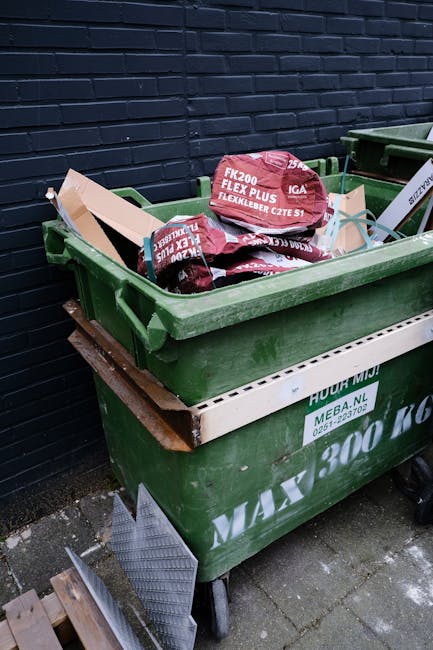
Bellegrove Road bulky rubbish collection for homeowners
If you live on or near Bellegrove Road and you are staring at an old sofa, a broken wardrobe, or a pile of renovation leftovers, you are not alone. Bulky waste has a knack for building up quietly, then suddenly taking over the hallway, garden, or spare room. This guide to Bellegrove Road bulky rubbish collection for homeowners explains what counts as bulky waste, how collection usually works, what to check before booking, and how to avoid the little mistakes that turn a simple clearance into a hassle.
Whether you are clearing after a move, replacing furniture, or just trying to get the garage back, the right approach saves time, stress, and usually money too. Let's make it straightforward.
Table of Contents
- Why Bellegrove Road bulky rubbish collection for homeowners Matters
- How Bellegrove Road bulky rubbish collection for homeowners Works
- Key Benefits and Practical Advantages
- Who This Is For and When It Makes Sense
- Step-by-Step Guidance
- Expert Tips for Better Results
- Common Mistakes to Avoid
- Tools, Resources and Recommendations
- Law, Compliance, Standards, or Best Practice
- Options, Methods, or Comparison Table
- Case Study or Real-World Example
- Practical Checklist
- Conclusion
- Frequently Asked Questions
Why Bellegrove Road bulky rubbish collection for homeowners Matters
Bulky waste is different from everyday household rubbish. A black bag or two might go out with the regular bin collection, but a bed frame, chest of drawers, broken trampoline, or old white goods usually needs a separate plan. That is especially true for homeowners who do not have a lot of storage space or easy access for loading things out to the pavement.
On streets like Bellegrove Road, access matters. Parking, narrow front gardens, steps, and shared driveways can all affect how quickly bulky waste can be removed. If you plan well, the collection is simple. If you do not, the whole job can drag on for days, with heavy items sitting in the way and everyone stepping around them. Not ideal, to be fair.
There is also a practical safety angle. Bulky rubbish can attract damp, pests, or mould if left out too long. Sharp edges, splintered wood, broken glass, and awkward lifting can create avoidable hazards. For homeowners, the goal is not just to "get rid of stuff"; it is to do it in a way that keeps the property tidy, safe, and workable.
Expert summary: bulky rubbish collection is most effective when you sort items early, understand what can and cannot be taken, and choose a method that fits your property layout. A little planning saves a lot of lifting. Simple as that.
How Bellegrove Road bulky rubbish collection for homeowners Works
The exact process depends on the service you use, but the basic flow is usually similar. A homeowner identifies the items, checks the collection method, arranges a date or time window, and makes sure the waste is ready to be taken away. In many cases, the collection team will either remove the items from the driveway, front garden, garage, or the front of the property if access is limited.
With larger or mixed loads, the provider may ask for photos first. That helps them estimate volume, identify heavy or unusual items, and decide whether a van, skip, or grab-based collection is the best fit. It is a sensible step, and it avoids awkward surprises on the day. Nobody enjoys the "oh, there's more than we thought" moment.
There are several common collection styles homeowners may consider:
- Man and van rubbish removal for mixed bulky items and fast clearances.
- Skip hire for ongoing projects where waste builds up over a few days.
- Grab hire for large volumes or heavy waste that can be reached from the road.
- Specialist item removal for things like sofas, mattresses, appliances, or clearance-only loads.
If you are weighing up the options, browsing a broader service such as rubbish removal can help you understand the difference between a quick all-in collection and a more project-based setup.
For homeowners, the main decision is usually convenience versus volume. If you have one sofa and a fridge, a direct collection may be enough. If you are clearing a loft, garage, or garden as well, you may need something more flexible, such as domestic skip hire or a full clearance service.
Key Benefits and Practical Advantages
The benefits go beyond just freeing up floor space. A good bulky rubbish collection service can make the whole house feel less cramped and more usable. That sounds obvious, but it really does change how a home functions day to day.
- Less physical strain: no wrestling with awkward items down stairs or through tight hallways.
- Faster turnaround: bulky waste can often be cleared much more quickly than a DIY trip to the tip.
- Cleaner property presentation: useful if you are selling, renting, or expecting visitors.
- Better safety: fewer trip hazards, splinters, and stacked items leaning in corners.
- More flexible planning: ideal for spring cleans, post-renovation tidy-ups, or end-of-tenancy work.
Another quiet advantage is mental. Clutter has a way of following you around the house, even when you are trying not to notice it. Once those bulky items are gone, rooms often feel bigger than you remembered. You breathe easier. It is a small thing, but not really.
For homeowners who care about waste handling, it is also worth choosing a provider that sorts items for recycling where possible. Services linked to recycling and sustainability can give you a better sense of what happens after collection, which is reassuring if you want to reduce what ends up in landfill.
Who This Is For and When It Makes Sense
This kind of collection makes sense for a wide range of homeowners. You do not need to be doing a full house renovation. Sometimes it is just one awkward job that has been hanging around for months.
Typical situations include:
- Replacing sofas, mattresses, wardrobes, or dining sets
- Clearing a garage that has become a storage room by accident
- Removing broken garden furniture, fencing, or shed contents
- Tidying after decorating, flooring work, or a small refurb
- Preparing a home for sale, rental, or family visits
- Dealing with inherited belongings or a partial house clearance
It also suits homeowners who do not have the time, vehicle, or physical ability to move large items themselves. Let's face it, not everyone has a van, a pair of gloves, and a free Saturday morning. And even if you do, loading a mattress in the rain is nobody's idea of fun.
If the job is bigger than a few items, a specialist service like house clearance can be more efficient than piecing together a self-managed solution. The same goes for lofts, garages, and overfilled storage spaces, where garage and loft clearance may be the cleaner route.
There is also a timing question. If your bulky waste is blocking access, creating odour, or interfering with a building project, it makes sense to act early rather than wait for the "right moment." That moment tends not to arrive on its own, oddly enough.
Step-by-Step Guidance
Here is a practical way to handle bulky rubbish collection without turning it into a mini crisis.
- List every item
Walk through the property and note what needs to go. Include furniture, appliances, mattresses, outdoor items, and any mixed waste around them. It sounds basic, but a proper list stops things being missed. - Separate bulky waste from general rubbish
Put smaller bagged waste aside if it belongs in another collection stream. Bulky waste services are usually best used for large, awkward, or heavy items rather than everything at once. - Check for restricted items
Some waste types need specialist handling, such as paint, chemicals, fridges, or certain electricals. If in doubt, ask before the day arrives. - Measure access points
Look at gates, side returns, hallways, and staircases. A collection team needs a workable route. A few minutes with a tape measure can save a lot of back-and-forth. - Take photos if requested
Clear images help the provider assess volume and pick the right vehicle. Stand back far enough to show scale, not just the close-up details. - Confirm where items will be left
Some collections happen from the kerbside, others from the driveway, garden, or inside the property. Make sure the plan is clear before the slot is booked. - Prepare the items
Where appropriate, dismantle loose pieces, remove drawers, and tape sharp edges. Small preparation now can make the removal much smoother later. - Check the collection day process
Know the arrival window, payment terms, and whether someone needs to be home. If access is tricky, leave any relevant gates unlocked and pets secured.
A tiny real-world note here: if you are clearing a room at 8 a.m. and the light is still a bit grey, it is very easy to underestimate how much there is. By mid-morning, once everything is stacked by the door, the pile suddenly looks twice the size. Happens all the time.
Expert Tips for Better Results
Small choices make a surprising difference with bulky rubbish. These are the habits that tend to make a collection smoother, cleaner, and more cost-effective.
- Group items by type: furniture together, electricals together, garden waste together. Sorting helps the team work faster.
- Keep routes clear: move shoes, planters, bins, and small obstacles out of the way before collection day.
- Break down what you can safely dismantle: flat-pack furniture often takes far less space once taken apart.
- Avoid overfilling your own front space: if items are stacked too high, it becomes harder and slower to remove.
- Ask about mixed loads: if you have old carpet, timber, and furniture all together, confirm whether they can be collected in one go.
- Plan around weather: a wet morning can make cardboard sag and increase mess. A tarpaulin or quick cover helps.
One genuinely useful tip is to think about the end point, not just the pickup. If you are replacing items, arrange the new delivery after the bulky waste has been removed. Otherwise, you end up with two sets of furniture fighting for the same hallway. Not ideal.
If you expect heavier loads or building debris alongside household waste, a more project-focused option such as builders waste removal may be worth a look. For renovation-heavy jobs, construction waste disposal can be a better fit than a standard household collection.
Common Mistakes to Avoid
Most bulky waste problems come from simple oversights, not major failures. A few common ones crop up again and again.
- Waiting too long to book: if the items are already in the way, delaying usually makes the job harder, not easier.
- Not checking access: a collection can be delayed if a van cannot reach the items safely.
- Mixing restricted waste in: this can cause refusal or extra handling requirements.
- Underestimating item size: that "small" wardrobe can be a nightmare on a narrow stairwell.
- Forgetting about weight: bulky does not always mean light. Wet timber, broken appliances, and compacted rubbish can be heavy.
- Not confirming the service level: some collections are load-and-go; others are more like doorstep pickup. Know which one you are booking.
One mistake people make quite often is leaving everything for the team to sort on arrival. A bit of preparation is usually expected. If a load is mixed and untidy, the collection can still happen, but it may take longer and feel more expensive than it needed to be. A small annoyance, but avoidable.
Tools, Resources and Recommendations
You do not need a specialist toolkit to manage bulky rubbish, but a few basic items help a great deal:
- Work gloves for handling rough or dusty items
- Tape or cable ties for bundling loose parts
- Dust sheets or tarpaulins to keep routes clean
- Marker pens and labels for separating what stays and what goes
- Measuring tape for checking access and item dimensions
- Phone camera for taking clear photos before booking
For many homeowners, the real resource is a clear plan. A simple list, a rough sketch of where items are stored, and a decision about whether you need a one-off collection or a larger clearance can make the whole job easier.
If your bulky rubbish is only one part of a bigger tidy-up, you may also find mattress and sofa disposal helpful when you are dealing with only a few large household items. For awkward appliances, fridge and appliance removal is a more targeted option. And if you have a broader mix of domestic waste, domestic skip hire can sometimes be the simpler route.
Law, Compliance, Standards, or Best Practice
Homeowners do not need to become waste law experts, but they do need to be careful about who takes their rubbish and how it is handled. In the UK, waste should be collected and disposed of by a responsible provider that follows applicable waste handling requirements. A reputable company should be clear about what it can take, how items are moved, and where the waste goes afterwards.
The main best-practice points are straightforward:
- Use a legitimate waste carrier: ask the right questions if you are unsure.
- Separate hazardous items: do not assume every material can go in one load.
- Keep records where appropriate: especially for larger clearances or mixed waste.
- Protect access and property: use safe lifting, clear walkways, and sensible packing.
- Be honest about the load: a fair description helps avoid delays and misunderstandings.
If your project involves items that may be classed as hazardous, such as old paint, solvents, or certain broken electricals, ask for guidance before collection. A safe provider will explain what is acceptable and what needs separate handling. That is a good sign, not a nuisance.
Some homeowners also want reassurance around security and payment. It is sensible to check the company's payment and security information and review practical policies such as health and safety policy and insurance and safety. Plainly speaking, if a provider is vague about these basics, move on.
Options, Methods, or Comparison Table
There is no single "best" bulky rubbish solution for every homeowner. The right method depends on how much you need to remove, how quickly you need it gone, and whether access is easy. Here is a simple comparison.
| Method | Best for | Strengths | Trade-offs |
|---|---|---|---|
| Man and van collection | Mixed bulky items, quick clearances, one-off jobs | Flexible, fast, minimal fuss | May be less ideal for larger ongoing projects |
| Skip hire | DIY projects, staged clear-outs, regular waste build-up | Useful for work done over several days | Needs space and possibly permits |
| Grab hire | Large volumes or heavy loads with roadside access | Very efficient for bigger piles | Not suitable if access is tight or items are scattered indoors |
| Specialist item removal | Single items such as mattresses, sofas, fridges | Targeted and convenient | Less useful for mixed household loads |
If you are still unsure, a quick rule of thumb helps: one room of clutter usually points toward removal or clearance; multiple rooms or an active project often suits skip-based solutions. For items that can be loaded and removed quickly, a service such as wait and load skip hire can be a neat middle ground. And if you need something fast, same-day skip hire may be the practical answer, depending on availability.
Case Study or Real-World Example
Imagine a homeowner on Bellegrove Road clearing out a rear bedroom after replacing a sofa bed, a wardrobe, and an old chest of drawers. The room is fine during the day, but once the items are moved into the hallway, it becomes obvious how awkward they are. The staircase turns sharply, the front path is narrow, and the old mattress bends exactly the wrong way every time someone tries to move it.
Rather than trying to squeeze everything into a family car or make multiple trips, the homeowner photographs the items, checks access, and books a collection for the next convenient window. The furniture is grouped near the front of the house, loose fixings are bagged separately, and a few smaller items are sorted out beforehand. The team arrives, loads efficiently, and clears the space in one visit.
The result is not just an empty room. It is a usable room again. The hallway opens up, the front area looks tidy, and the homeowner can move on to decorating without stepping over a half-finished pile for another week. That is the real value here: less clutter, less friction, fewer half-jobs hanging around. Nice and clean.
For larger home projects, the same logic applies. If the waste is building up over several days, skip hire may be more practical. If it is a single bulky load, straightforward man and van removal can often be the cleaner fit.
Practical Checklist
Use this quick checklist before arranging your bulky rubbish collection:
- List every large item you want removed
- Separate bulky waste from ordinary bagged rubbish
- Check whether any item needs special handling
- Measure gates, paths, stairs, and access points
- Take clear photos of the load
- Decide whether you need one-off removal or a larger clearance
- Clear the route from the items to the pickup point
- Protect floors or walls if items are heavy or sharp
- Confirm the collection window and who needs to be present
- Ask what happens to recyclable items after collection
If you are dealing with a bigger clear-out, it can help to read more about skip sizes and prices before you decide. And if you want to book quickly once you know what you need, book online when ready.
Conclusion
Bellegrove Road bulky rubbish collection for homeowners is really about making a difficult job feel manageable. Once you understand what counts as bulky waste, how collection options differ, and what preparation matters, the process becomes much easier to handle. A little planning goes a long way. You save time, reduce lifting, and avoid the mess of trying to improvise on the day.
If you are clearing a single item, a few pieces of furniture, or a full room of household clutter, the best result usually comes from matching the method to the load rather than forcing everything into one solution. That is the difference between a rushed tidy-up and a proper reset of the space.
Get a free quote today and see how much you can save.
And when the last bulky item is finally gone, there is a particular kind of calm that settles into the house. Quiet, open, useful again. That part never really gets old.
Frequently Asked Questions
What counts as bulky rubbish for a homeowner?
Bulky rubbish usually means large household items that are too big or awkward for standard bin collection. That includes furniture, mattresses, appliances, shelving, and similar items. If you need two hands just to shift it, it is probably bulky enough to plan separately.
Can I put bulky items out on the pavement without booking a collection?
Usually no, not unless the relevant waste service has been arranged and the items are placed in line with the provider's instructions. Leaving items out without a plan can cause obstruction or collection issues. It is always better to confirm the process first.
Is bulky waste collection better than hiring a skip?
It depends on the job. If you have a few large items and want them gone quickly, collection is often easier. If you are doing a bigger clear-out over several days, a skip may suit you better. Think about volume, access, and whether the waste will arrive all at once or gradually.
How do I know whether my items need special disposal?
Anything potentially hazardous, such as chemicals, paint, gas canisters, or certain electrical items, should be checked carefully before booking. If you are unsure, ask the provider directly. A clear answer early on prevents delays later.
What should I do before the collection team arrives?
Make sure the items are accessible, pathways are clear, and anything fragile is moved out of the way. If possible, dismantle easy-to-break-down furniture and keep smaller related pieces together. A tidy setup makes the whole job faster.
Can a bulky rubbish service remove appliances like fridges or washing machines?
Often yes, but appliances may need their own handling rules depending on the item. It is worth asking before the day of collection, especially for fridges, freezers, and anything with gas or coolant. Never assume every appliance is treated the same.
How much space do I need for a skip or collection vehicle?
That depends on the method. A collection vehicle may only need a reasonable loading space and access to the items, while a skip needs enough room to be placed safely. Tight roads, parking pressure, and front garden access all matter. Measure first if you are unsure.
What happens to bulky waste after it is collected?
Many providers sort waste so recyclable materials can be separated from general rubbish. The exact process depends on the type of load and the company's handling arrangements. If sustainability matters to you, ask how items are processed after removal.
Can I mix garden waste with bulky household items?
Sometimes mixed loads are possible, but it depends on the service. Soil, branches, fence panels, furniture, and household clutter may need to be handled differently. It is better to describe the load accurately than to guess and cause a delay.
Do I need to be home for the collection?
Not always, but many providers prefer someone to be available, especially if access needs explaining or items are inside the property. If you cannot be there, make sure the arrangements are very clear in advance. A quick handover can save a lot of confusion.
What is the best option for a small garage clear-out?
For a small garage with a handful of bulky items, a direct removal service is often enough. If the garage also contains bagged waste, boxes, and mixed clutter, a broader clearance or domestic skip solution may be more practical. The right choice usually comes down to how much sorting is still needed.
Can bulky rubbish collection help before I sell my home?
Yes, definitely. Clearing large unused items can make rooms look bigger, improve first impressions, and reduce the sense of clutter. Even one or two removed items can change how a home feels in photos and during viewings. That little bit of space can make a real difference.